The Truest Things You Say Are Said to Tile and Steam
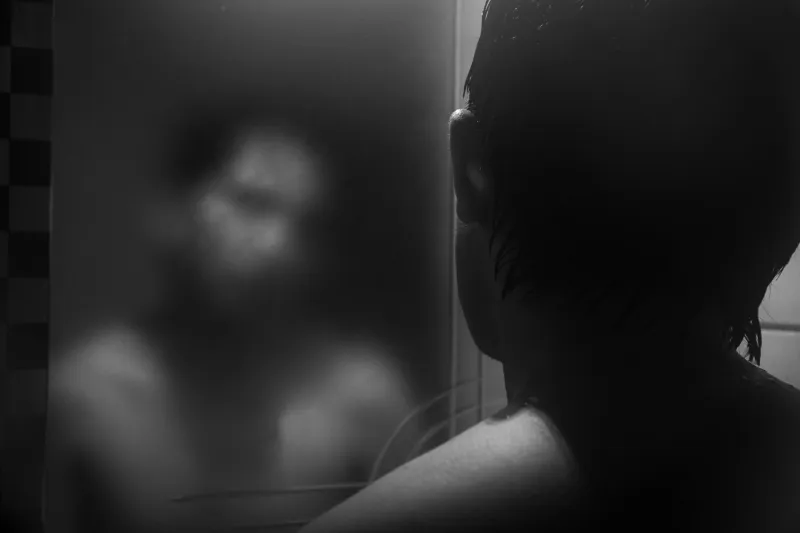
There is a room in most American homes that doubles, without anyone quite acknowledging it, as a confessional. It has no priest, no pew, no formal architecture of absolution. It has a showerhead, a bar of soap going soft at the edges, and a lock on the door that signals — however temporarily — that the world outside must wait.
In that room, something unusual happens. We argue. We rehearse. We apologize to people who cannot hear us, and we deliver the devastating comebacks we failed to produce in the actual moment, three days ago, in a parking lot in front of witnesses. We cry sometimes, without knowing quite why. We ask ourselves questions we have been avoiding for weeks. And occasionally — not always, but occasionally — we arrive at something that feels like an answer.
This is the inner monologue in its native habitat: unscripted, unfiltered, and startlingly honest.
The Performance We Don't Know We're Giving
Social psychologists have long noted the distance between our public and private selves, but they rarely frame that gap in terms of the bathroom. Erving Goffman, whose work on social performance remains one of the more clarifying frameworks for understanding human behavior, described everyday life as a kind of theater — we are always, to some degree, performing for an audience. We modulate our voices, choose our words, manage our expressions. We are not being false, exactly, but we are being edited.
The shower removes the editor.
There is no audience, and so there is no performance. The self that emerges in that steam-filled solitude is not a better or worse version of you — it is simply a less curated one. And what that uncurated self chooses to say, to rehearse, to confess, to mourn, is worth paying close attention to.
Consider what you talk about in there. The unresolved argument with your mother. The work email you should not have sent. The friend you have been meaning to call for six months and have not. The ambition you have never mentioned to anyone because saying it aloud would make its failure more consequential. These are not random intrusions. These are the things that actually matter to you, surfacing the moment you stop actively suppressing them.
Rehearsal as Revelation
One of the most common activities of the private inner monologue is rehearsal — the mental staging of conversations we need to have, or wish we had handled differently. We play both parts. We anticipate objections. We try out different tones, different openings, different ways of saying I was hurt by that or I don't think this is working or I need something from you that I have never asked for before.
This rehearsal is often dismissed as anxiety, as rumination, as a failure to simply let things go. But there is another way to read it. Rehearsal is a form of preparation that takes the other person seriously. It is an act of imaginative empathy — we are, in essence, trying to understand how our words will land before we release them into the world. The shower is where we do that work quietly, without the stakes of an actual human face watching us fumble.
Writers know this process intimately. The first draft of anything — the first attempt to articulate something true — is almost always private, almost always halting, almost always spoken rather than written. Many novelists report that they find their characters' voices not at the desk but in motion, in the car, in the shower. The prose comes later. The truth comes first, in the steam.
Why Ordinary Spaces Unlock Extraordinary Honesty
There is a quality to mundane, repetitive tasks — showering, driving, washing dishes — that neurologists and psychologists have begun to study with increasing interest. When the conscious mind is occupied with something simple and automatic, the default mode network activates. This is the brain in a state of inward reflection rather than outward engagement. It is associated with memory, imagination, self-referential thought, and — crucially — the kind of loose, associative thinking that generates insight.
In other words, your brain is doing some of its most honest work precisely when your hands are on autopilot.
The shower, then, is not merely a place where you happen to think. It is an environment specifically conducive to the kind of thinking that bypasses your usual defenses. The white noise of running water creates a kind of acoustic privacy that the mind seems to register even when no one else is home. The warmth is physiologically calming. The ritual is familiar enough to require no attention. All of that combines to lower the threshold between what you know and what you allow yourself to know.
The Gap Between the Person You Present and the Person You Are
What disturbs us, if we are honest, is not the content of the shower monologue. It is the distance between that content and what we actually say to the people in our lives.
How many of us have delivered, in the privacy of a locked bathroom, a more truthful account of our feelings than we have ever managed to give to the person those feelings concern? How many apologies have been fully formed and sincerely meant in that space, only to emerge later — if at all — as something smaller, more defended, more deniable?
The inner monologue is not the problem. The problem is the distance we maintain between what happens there and what we carry back out into the world.
This is not a call to simply say everything you think in the shower. Some of those thoughts are raw and unready; some of the arguments you rehearse would be catastrophic if delivered verbatim. But there is a version of that private honesty — stripped of performance, stripped of the need to manage how you are perceived — that most of our relationships are quietly starving for.
What the Water Already Knows
There is a reason people cry in the shower. It is not simply the privacy, though that matters. It is that the shower is one of the few places in modern American life where we grant ourselves permission to feel without immediately managing the feeling. We are not reaching for our phones. We are not performing composure for an audience. We are, for a few minutes, simply present with whatever is actually happening inside us.
That is rarer than it should be.
The essay you are reading right now began, in some sense, as a shower thought — as a moment of private recognition that the truest things I have ever said, I said to no one in particular, in a room that smelled of eucalyptus and old grout. The honest version of myself lives there, behind a locked door, speaking freely to the steam.
The question is not how to bring that person into the world — not wholesale, not without revision. The question is how to close the distance, just a little, between the self who speaks honestly in solitude and the self who speaks to the people who actually need to hear it.
The water is already running. You already know what you need to say.