Dear Person I Never Called Back: On the Letters We Write Only to Ourselves
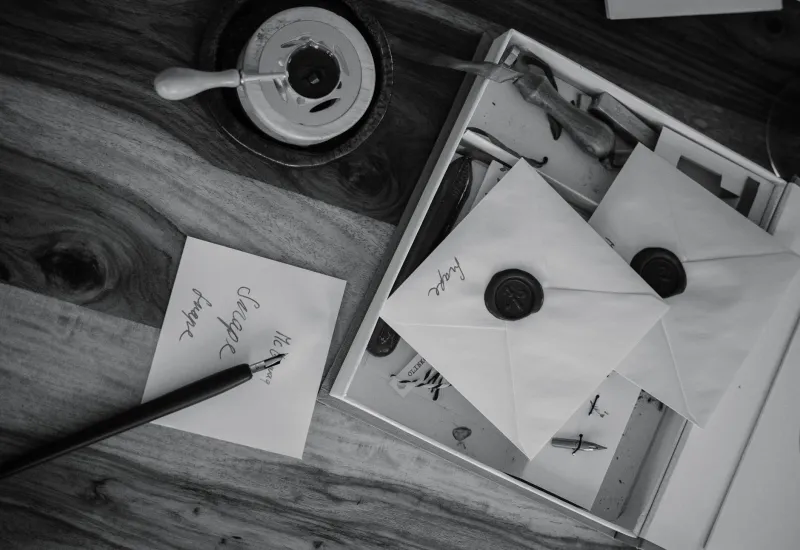
The Draft That Lives in the Drawer
Somewhere between the thing you meant to say and the thing you actually said lies the territory most writers know best. It is not silence, exactly. It is something more populated than that—a crowded internal space where the real conversations happen long after the door has closed, long after the other person has driven home, long after the moment has passed with the finality of a season changing.
Writers talk a great deal about courage. We celebrate the memoir that names names, the poem that admits the shameful thing, the personal essay that holds its author accountable in public. But there is a quieter, stranger form of literary bravery that rarely gets its due: the act of writing the conversation that will never, under any circumstances, actually occur.
This is not failure. It is, perhaps, a different species of speech altogether.
Why Speaking Fails Us Where Writing Does Not
Consider the mechanics of a difficult conversation in real time. You are managing your own voice—its pitch, its steadiness—while simultaneously reading the face of another human being, processing their interruptions, anticipating their defenses, and trying to locate the sentence you rehearsed in the shower that morning, which has now completely vanished. You are, in other words, doing six things at once, and none of them is thinking.
The page removes all of that. On paper, the other person cannot interrupt. They cannot flinch in a way that makes you retreat. They cannot deploy the particular expression—that slight tightening around the eyes—that has historically caused you to say never mind when you meant something else entirely. The page is, in this sense, a controlled environment. A laboratory for honesty.
This is why so many writers describe their most truthful work as having been addressed to a specific person who will almost certainly never read it. The absence of the audience is precisely what permits the truth. We are not performing for them; we are finally, at last, speaking to them.
The Paradox of Avoidance as Arrival
There is an argument—and it is not an ungenerous one—that writing these private dispatches is simply a sophisticated form of avoidance. That the person who composes a six-page letter to an estranged parent and then seals it in an envelope they never address is using literary craft as a way of feeling like they have done something without actually doing anything at all.
This argument has merit, and it deserves to be held seriously rather than dismissed.
And yet.
Something does happen in the writing of the undelivered letter. Something shifts in the person who writes it that would not shift otherwise. The act of committing difficult words to a specific, named human being—even in the privacy of a document no one else will open—forces a precision that the vague internal monologue never achieves. You cannot write I was hurt by what you did without eventually being pressed, by the demands of the sentence itself, to articulate what, exactly, was done. The page asks follow-up questions. It will not let you stay comfortable in the general.
In this way, writing what we cannot say aloud becomes its own form of arrival. Not at the other person. But at ourselves.
What the Character Knows That You Don't
Fiction writers have long understood this dynamic, even when they have not named it directly. The novelist who insists that a particular character simply had to say a certain thing—who describes being surprised by their own dialogue—is often reporting something true about the relationship between the writer's conscious intentions and the deeper, less managed self that surfaces in the act of composition.
When you write a character who finally confronts their mother at Thanksgiving dinner in a way you have never confronted yours, something is being processed. When you draft a scene in which an ex-lover receives the precise articulation of the damage they caused, and you find yourself crying at your desk in a way that feels disproportionate to the fictional stakes, the page is telling you something about the distance between what you have said and what you have needed to say.
This is not therapy, though it may produce some of the same effects. It is, more precisely, a form of translation—moving something from the wordless interior into language, which is the only medium through which human beings can truly examine a thing.
The Ethics of the Private Page
There is a question worth pausing on: what is the ethical weight of writing about real people in documents those people will never see? This is distinct from the well-worn debate about memoir and exposure. The unsent letter, the private journal entry addressed to a living person, the poem filed away rather than submitted—these exist in a different moral register.
They are, in some sense, free. Free of consequence, free of the other person's right to respond, free of the social contract that governs what we say to one another's faces. And that freedom is both their power and their limitation.
The private page cannot repair a relationship. It cannot deliver an apology or receive one. It cannot give the other person the information they might need to understand what happened between you. What it can do is clarify—for the writer alone—what the truth actually is. And that clarification, while incomplete, is not nothing. It is, in fact, the necessary first step toward any honest conversation, whether that conversation ever takes place or not.
Writing Toward the Courage You Don't Yet Have
Some of the best personal essays begin as private documents that were never meant to be read. The writer composes something for themselves—raw, unguarded, addressed to a specific person in their life—and discovers, in the editing, that the particularity of the private has become the universality of the published. What began as a letter to one person becomes something that thousands of readers recognize as their own unwritten correspondence.
This is the strange alchemy of literary honesty. The more precisely you write toward a specific, unresolvable human situation, the more broadly it resonates. The reader does not need to know your mother to recognize their own mother in what you have written. They do not need to share your history of not calling back, of letting the voicemail fill up, of composing the message and then deleting it—they need only to have had a drawer of their own.
Most of us have that drawer.
The question the page keeps asking, with patience and without judgment, is whether we are ready to open it—not necessarily to send anything, not necessarily to have the conversation we have been rehearsing for years, but simply to look at what is in there. To read what we wrote in the dark and recognize it, finally, as something true.
That recognition, quiet and private as it is, may be the most honest conversation any of us ever manage to have.