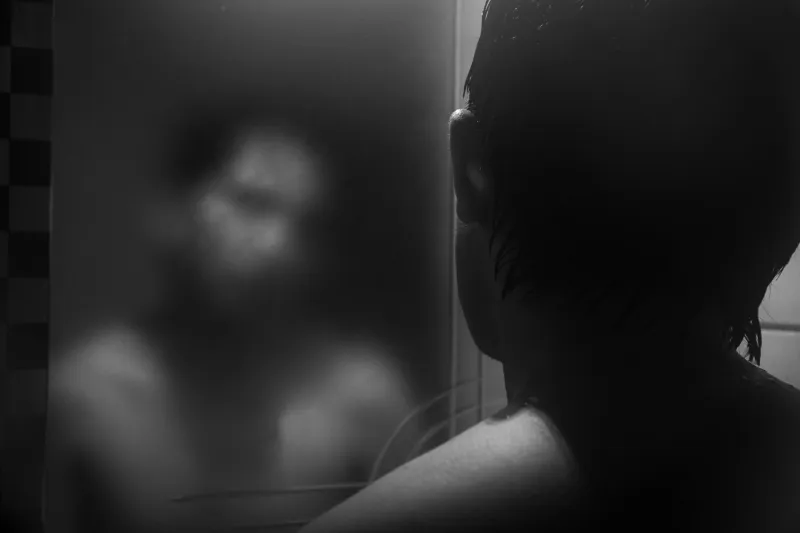
The Argument You Won Alone at 2 A.M.: On the Phantom Conversations We Cannot Stop Rehearsing
There is a version of you who handled it perfectly. You said the right thing at the right moment, your voice steady, your words precise. The other person understood. They apologized, or they finally listened, or they simply acknowledged what you had been carrying for years. The conversation ended cleanly, the way real conversations almost never do.
You have replayed this scene dozens of times. Perhaps hundreds.
And yet it never happened.
The Theater of the Unsaid
Psychologists have a name for the compulsive mental replaying of past events: rumination. But that clinical term flattens something far stranger and more human than its definition suggests. Rumination implies a kind of passive, circular suffering—a cow chewing cud, going nowhere. What we actually do feels more deliberate than that. We direct these phantom conversations. We assign lines, revise them, cast ourselves in a more articulate light. We are playwrights staging productions that will never open.
The imagined dialogue is one of the mind's most persistent and peculiar habits. It arrives unbidden while you are driving the 405, folding laundry, or lying in the dark at an hour when you should have been asleep two hours ago. A memory surfaces—a dinner table argument that ended badly, a moment when someone dismissed you in front of others, a breakup you never properly addressed—and suddenly you are back inside it, rewriting the script in real time.
What you should have said. What they should have admitted. The sentence that would have changed everything.
Why the Mind Refuses to Let It Rest
The rehearsal quality of these inner dialogues is not accidental. The brain, researchers suggest, processes unresolved emotional experiences differently from those it considers closed. The Zeigarnik effect—the well-documented tendency to remember interrupted tasks more vividly than completed ones—applies not just to to-do lists but to relationships. An unfinished conversation lodges itself in working memory like a splinter the mind cannot stop probing.
But there is something beyond mere neurological housekeeping at work here. These phantom exchanges tend to cluster around specific emotional territories: moments when we felt unseen, when we swallowed something true to keep the peace, when we discovered too late that we had more to say than we allowed ourselves. The imagined argument is rarely just about the argument. It is about the need underneath the argument—the need to be taken seriously, to be known accurately, to have our interior life acknowledged by someone whose acknowledgment mattered to us.
We rehearse because the original performance left us unrecognized.
The Comeback That Arrived Three Days Late
The French have a phrase for it: l'esprit de l'escalier—the wit of the staircase. It describes the brilliant retort that occurs to you only after you have already left the room. But the phenomenon extends well beyond wit. It encompasses the apology you finally understood you owed someone six months after you parted ways. The explanation you could not articulate in the moment because grief had not yet given you its full vocabulary. The boundary you did not know you had until someone crossed it so thoroughly that you spent the following year practicing how you would enforce it next time.
There is something quietly devastating about the staircase epiphany. It confirms what we suspect about ourselves in our least forgiving moments: that we are always slightly behind our own experience, perpetually arriving at clarity one conversation too late. The phantom dialogue is, in part, an attempt to close that gap retroactively—to give the past self the resources the present self has only just acquired.
It does not work, of course. The conversation remains imaginary. The other person does not receive the message. And yet the rehearsal continues.
What We Are Really Practicing
Here is what I have come to believe, after years of conducting my own internal tribunal: the phantom conversation is not primarily about the past. It is preparation for the future, dressed in the costume of regret.
When we rehearse what we should have said to a parent who never quite saw us, we are also practicing how to ask, more clearly, to be seen by the people in our lives right now. When we draft and redraft the letter we will never send to the colleague who undermined us, we are learning the precise shape of our own professional dignity—what we will and will not accept the next time. The imagined confrontation is, at its best, a rehearsal studio. It is the place where we develop the emotional vocabulary we have not yet found the courage to use aloud.
At its worst, it is a trap. The rehearsal becomes a substitute for the real thing. We perfect the imaginary version with such thoroughness that the actual conversation—messy, uncertain, populated by a real person with their own defenses and blind spots—comes to seem not worth the risk. Why have the difficult exchange when you have already won it so many times in your head?
The Gap Between the Inner Life and the Outer Word
What the phantom conversation ultimately illuminates is the extraordinary distance between who we are inside and who we manage to be in the room. Most of us carry an inner life of considerable sophistication—nuanced, articulate, morally serious—that our external relationships only partially reflect. We are funnier in our heads than we are at the dinner table. We are braver in the car than we are on the phone. We are more honest with the shower tiles than we are with the people who most need our honesty.
This gap is not a personal failing. It is the human condition, rendered in its most ordinary form. Language is imprecise. Timing is cruel. Other people are unpredictable, and the stakes of real speech—the risk of rejection, misunderstanding, or the irreversible rupture of something fragile—are genuinely high. The mind retreats to the controlled environment of the imagined exchange because there, at least, it can speak without consequence.
But consequence is also what makes speech matter.
Learning to Read the Rehearsal
If these phantom dialogues cannot be silenced—and they cannot; the mind is not a theater you can simply lock up and leave—they can at least be read with some intelligence. The next time you find yourself mid-monologue in an argument that exists only in your own skull, try pausing long enough to ask: what is the need underneath this rehearsal? Not what did they do wrong, but what did you need that you did not receive? Not what should you have said, but what are you still afraid to say?
The answer will not deliver itself cleanly. But it will tell you something true about where your real life is asking for your attention—not the imagined life you are so fluently narrating in the dark, but the actual one, still unfinished, still waiting for you to show up and say the thing you have been practicing all this time.