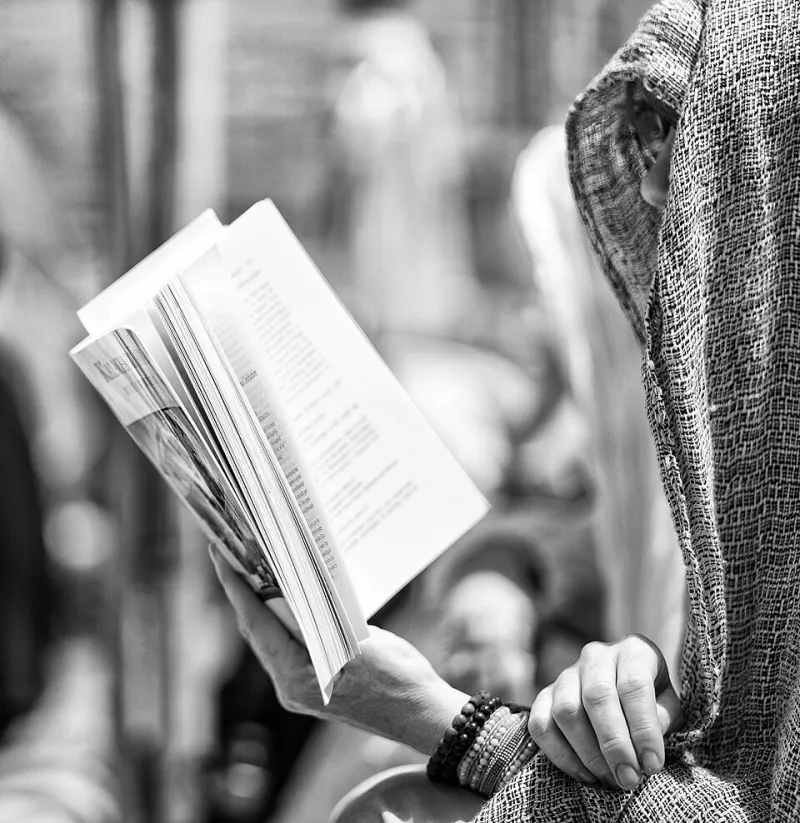
Ink in the Margins: The Quiet Revolt of the Reader Who Talks Back

Photo by Photo by Kiwihug on Unsplash on Unsplash
There is a particular kind of reader who cannot leave a book unmarked. You have likely met one. Perhaps you are one. Their shelves hold volumes that look, to the uninitiated, as though they have survived some minor catastrophe—pages creased at their corners, passages drowned in yellow highlighter, margins crowded with handwriting so urgent it sometimes crawls up the spine. Ask them to lend you a book and they hesitate, not from possessiveness but from something closer to exposure. Those margins are a self-portrait.
This reader has always existed. But in 2024, surrounded by frictionless feeds and algorithmic reading lists, the annotator has taken on a new significance. They are, whether they know it or not, committing a small act of rebellion.
The Architecture of Distraction
Consider the conditions under which most Americans now encounter text. The smartphone delivers prose in fragments—articles calibrated for the three-minute commute, newsletters designed to feel intimate while demanding nothing. Even dedicated e-readers, for all their elegance, encourage a kind of hovering relationship with language. You swipe. You tap. You highlight in a color chosen from a preset menu. Your annotation syncs to the cloud and sits alongside the identical annotations of ten thousand other readers who flagged the same sentence you did. The collective underline. The crowd-sourced epiphany.
There is nothing inherently wrong with any of this. But something is missing, and that something is friction. The resistance of the page. The irreversibility of ink.
When you write in a physical book, you are making a commitment. You cannot unsay it. The pen has touched paper and the paper has received it, and now the two of you—reader and text—are bound together in a way that no delete key can undo. This permanence is not incidental. It is, in fact, the entire point.
The Conversation Frozen in Time
Literary scholars have long understood that marginalia is primary source material of the highest order. The annotations left by John Adams in his personal library, now preserved at the Boston Public Library, reveal a mind in constant argument with itself and with history. Samuel Taylor Coleridge was such a compulsive annotator that his marginalia were eventually collected and published as their own volume. Mark Twain's copy of Adventures of Huckleberry Finn—yes, his own book—contains his revisions and second thoughts in pencil. These marks are not damage. They are evidence of a mind fully awake to what it was reading.
What the annotated book preserves is not merely a reader's opinion of a text. It preserves the encounter itself—the exact moment when a particular human being, in a particular season of their life, met a particular arrangement of words and was changed, or challenged, or simply stopped in their tracks. The margin note is a timestamp on consciousness.
To write yes! beside a paragraph is to sign a contract with the writer. To write but wait— is to begin a dialogue that the writer may never answer but that the reader has extended anyway, into the silence, across time. This is not defacement. This is reading at its most honest.
The Ruined Book and the Living One
There persists, especially in American culture, a reverence for the pristine book. The uncracked spine. The pages that have never been touched by anything but eyes. This reverence is understandable—books are beautiful objects, and there is real pleasure in their physical integrity. But it is worth examining what this impulse protects and what it forecloses.
A book kept immaculate is a book kept at arm's length. It is admired but not inhabited. The reader who refuses to mark the page is, in some sense, refusing full entry—treating the text as a museum exhibit rather than a living space. The so-called ruined book, by contrast, has been used. It has been argued with, wept over, returned to. It carries the sediment of multiple readings, each layer of pencil or ink representing a different version of the reader at a different moment in time.
Some readers report a kind of vertigo when they return to heavily annotated copies of books they first read years earlier. The person who wrote those notes in the margin is, in some meaningful sense, no longer present—and yet there they are, preserved in blue ink, arguing with a novelist about free will, circling a metaphor with three question marks, writing call Mom about this beside a passage about estrangement. The annotated book becomes a diary that doesn't know it's a diary.
Reclaiming Depth in a Shallow-Water Age
The resurgence of interest in physical annotation—documented in bookselling trends, in the growing popularity of commonplace books, in the #annotating community that has found an unlikely home on social media—is not mere nostalgia. It is a response to a genuine hunger. Readers are recognizing, often without articulating it directly, that the ease of digital reading has come at a cost to depth.
Cognitive research supports this intuition. Studies conducted over the past decade consistently suggest that readers who engage in active note-taking while reading demonstrate stronger comprehension and longer retention than those who read passively, regardless of medium. The act of forming a written response—even a brief one, even a question mark—requires the brain to process the text at a different level. You are not simply receiving. You are translating, evaluating, responding. You are, in the truest sense, reading.
This is not an argument against digital reading. It is an argument for intentionality. The reader who chooses to engage—who picks up the pencil, who folds the corner of the page, who writes this is wrong and here is why in the white space beside an argument they find insufficient—is making a choice about the quality of their attention. In an age that profits from distraction, that choice carries weight.
A Word in the Margin Is a Word in Your Eye
There is a reason the act of annotation feels intimate, even transgressive. It insists on presence. It refuses the passive relationship that so much of our media landscape is designed to cultivate. To annotate is to say: I was here. I thought about this. It mattered enough to mark.
The annotated book is not a ruined book. It is a book that has been fully read—which is to say, a book that has been loved in the most demanding way available to a reader. Pick up a pen. Write in the margins. Start the conversation. The writer, whoever they are, has been waiting for exactly this.